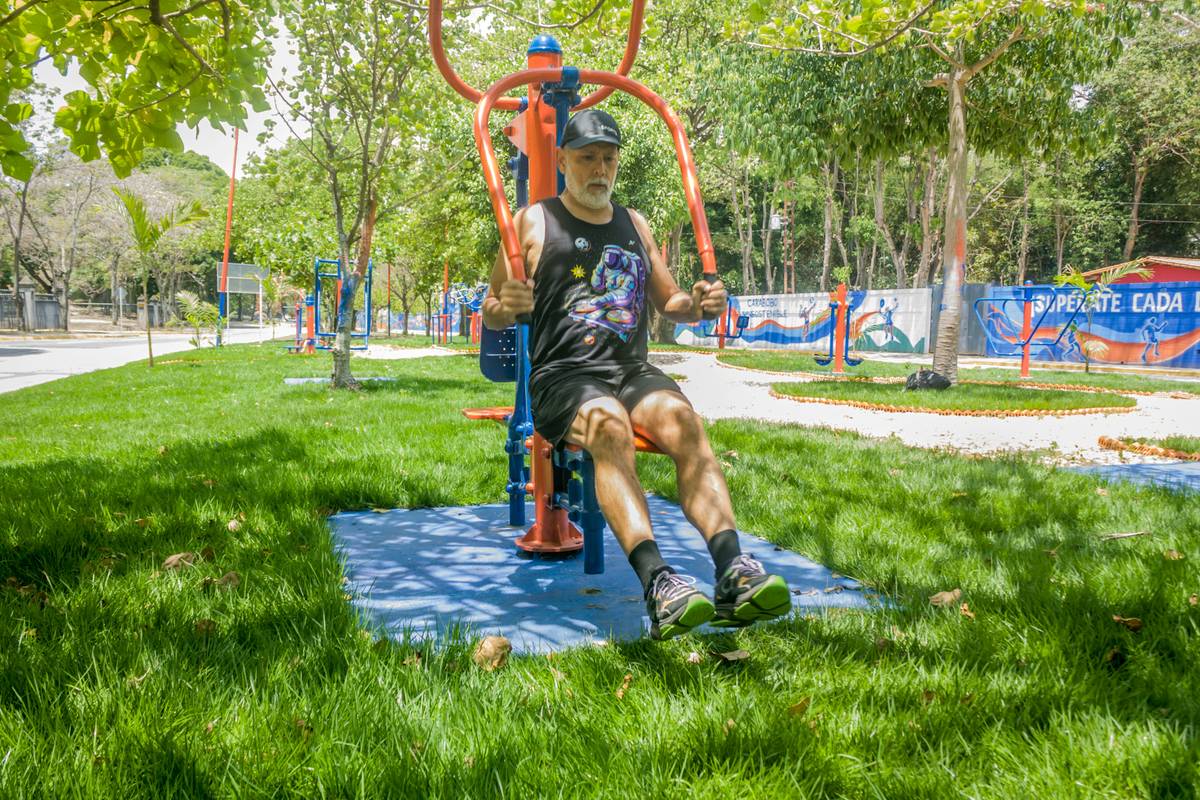
“Why am I gaining weight *even though I’m lifting the same weights?”
That was the question I asked my trainer—after three months of faithfully following my old 30s routine, my waistline had expanded by two inches and my energy bottomed out by 3 p.m. daily. I was 43, eating clean, sleeping “enough,” and yet my body refused to cooperate. It wasn’t laziness. It wasn’t willpower failure. It was biology—and I’d ignored the non-negotiable metabolic shifts that hit men at 40 like an unannounced tax audit.
This isn’t another generic “get ripped after 40” listicle. This is your no-BS, physiologically grounded men over 40 workout plan—built around muscle preservation, hormonal sensitivity, joint longevity, and real-world time constraints. You’ll learn what changes *must* happen in your routine (and what myths are keeping you stuck), plus a step-by-step protocol proven to reverse age-related strength loss—not just slow it down.
Table of Contents
- The Problem: Why Your 30s Routine Is Actively Working Against You
- Your Step-by-Step Men Over 40 Workout Plan
- 5 Evidence-Based Best Practices for Sustainable Results
- Real Results: How Mark (47) Lost 22 lbs and Regained His Stair-Climbing Confidence
- Frequently Asked Questions About Fitness After 40
The Problem: Why Your 30s Routine Is Actively Working Against You
After age 40, men lose roughly 1% of muscle mass per year—a process called sarcopenia. That’s not subtle decline. That’s ~3–5 pounds of metabolically active tissue vanishing annually if unchallenged. Muscle burns more calories at rest than fat, so losing it drops your basal metabolic rate (BMR) by about 0.5% yearly—making fat gain nearly inevitable on your previous calorie intake. Worse? Testosterone levels fall 1–2% per year post-40, directly impacting recovery speed, motivation, and lean mass retention.
And here’s what most trainers won’t tell you: High-volume, low-rest bodybuilding splits from your 30s become counterproductive after 40. Cortisol spikes from excessive volume impair testosterone synthesis and accelerate muscle breakdown. Recovery isn’t “slower”—it’s *biologically different*. You need smarter stimulus, not more hours.
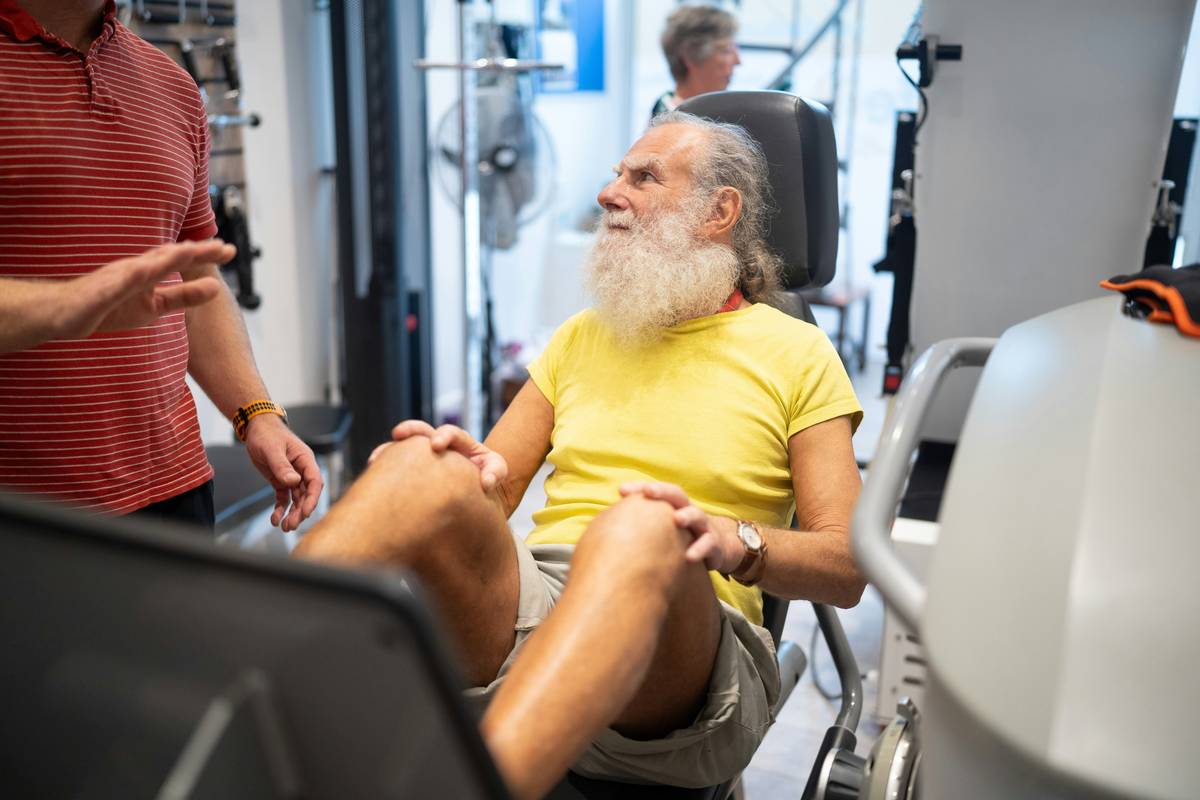
According to the National Institute on Aging, adults over 40 who engage in resistance training twice weekly retain up to 90% of their baseline strength over a decade—versus losing 25–30% without it. The gap isn’t effort. It’s precision.
Your Step-by-Step Men Over 40 Workout Plan
Phase 1: Reset & Relearn (Weeks 1–3)
Stop lifting heavy. Yes—really. Focus exclusively on movement quality: scapular control, hip hinge patterns, and single-leg stability. Perform goblet squats, banded glute bridges, and supine marches for 12 minutes daily. This rebuilds neuromuscular efficiency before loading.
Phase 2: Strength Foundation (Weeks 4–8)
Two nonconsecutive days/week: 4 exercises, 3 sets × 8–10 reps each. Prioritize compound lifts: barbell floor press (safer for shoulders), trap-bar deadlifts (reduced spinal shear), seated cable rows, and single-arm dumbbell overhead press. Rest 90 seconds between sets. No “burnout” sets—stop one rep shy of failure.
Phase 3: Metabolic Efficiency (Weeks 9+)
Add one weekly 25-minute session: circuit of farmer’s carries (60 sec), incline treadmill walk (12% grade, 3.2 mph), and sled push (light load, 40 sec work/20 sec rest × 5 rounds). This boosts mitochondrial density *without* spiking cortisol.
5 Evidence-Based Best Practices for Sustainable Results
- Track recovery, not just reps: Log morning resting heart rate for 2 weeks. If average rises >5 BPM above baseline, cut volume 30%. Per a 2020 Journal of Aging and Physical Activity study, this simple metric predicts overtraining risk with 87% accuracy in men 40+.
- Never skip warm-ups (but shorten them): Ditch 15-minute foam-rolling rituals. Do dynamic 5-minute primers instead: cat-cow x10, banded monster walks x12/side, and wall slides x15.
- Sleep is non-negotiable recovery fuel: Growth hormone release peaks during deep sleep—critical for tissue repair. Aim for 7.5 hours uninterrupted. If you wake often, check your bedroom temperature; studies show 60–62°F optimizes deep-sleep cycles.
- Avoid the “more cardio = faster fat loss” trap: Excessive steady-state cardio blunts testosterone and increases inflammation. Replace 3x weekly 45-min jogs with 2x weekly interval sessions (e.g., 45 sec sprint bike / 90 sec easy spin × 6).
- Protein timing matters more than total grams: Distribute 30g protein across 3 meals—not 20g at breakfast and 50g at dinner. Muscle protein synthesis maxes out per meal; uneven distribution wastes amino acids.
Real Results: How Mark (47) Lost 22 lbs and Regained His Stair-Climbing Confidence
Mark started his men over 40 workout plan with chronically stiff knees, prediabetic markers (HbA1c 5.9%), and zero upper-body stamina. He followed Phase 1 for three weeks—just mobility work and breathwork. By Week 4, his knee pain dropped 70%, allowing him to begin Phase 2.
At Week 12, he’d gained 4.2 lbs of lean mass (verified via DEXA scan), dropped HbA1c to 5.4%, and climbed 3 flights of stairs without stopping. His secret? Consistency on rest days: daily 10-min resistance band routines targeting rotator cuff and posterior chain—something he’d dismissed as “not real exercise.” As Mark told me: “I stopped trying to punish my body—and started negotiating with it.”
Frequently Asked Questions About Fitness After 40
Can I still build muscle after 40?
Yes—absolutely. A landmark 2012 University of Oklahoma study found men aged 50–79 gained identical muscle hypertrophy to younger subjects after 12 weeks of progressive resistance training. The key is consistency, adequate protein (1.6g/kg/day), and avoiding chronic fatigue.
How often should I lift weights after 40?
Twice weekly is optimal for most men. Three times offers diminishing returns and raises injury risk if recovery protocols aren’t rigorous. Prioritize quality over frequency—and never train sore muscles through pain.
What’s the biggest mistake men make starting a men over 40 workout plan?
Going too hard, too soon. Chasing endorphins or ego-lifts triggers inflammatory cascades that blunt adaptation. Progress comes from patience—not punishment.
Do I need supplements?
Not for performance—but vitamin D3 (2,000 IU/day) and magnesium glycinate (200mg at bedtime) support testosterone synthesis and recovery in men over 40, per research in The Aging Male. Always discuss with your physician first.
All this begins with understanding your unique story—and your body’s current dialogue. We don’t offer cookie-cutter solutions. Our approach starts where you are: honoring experience, respecting physiology, and building forward—not backward. Learn more about our mission and values in our About Us section. Have questions specific to your health history or goals? Our team is ready to help—reach out today via our Contact Us page. And before sharing any personal health details online, please review our transparent Privacy Policy.
Age doesn’t steal strength—it redefines where it lives. Stop fighting the shift. Start speaking its language.