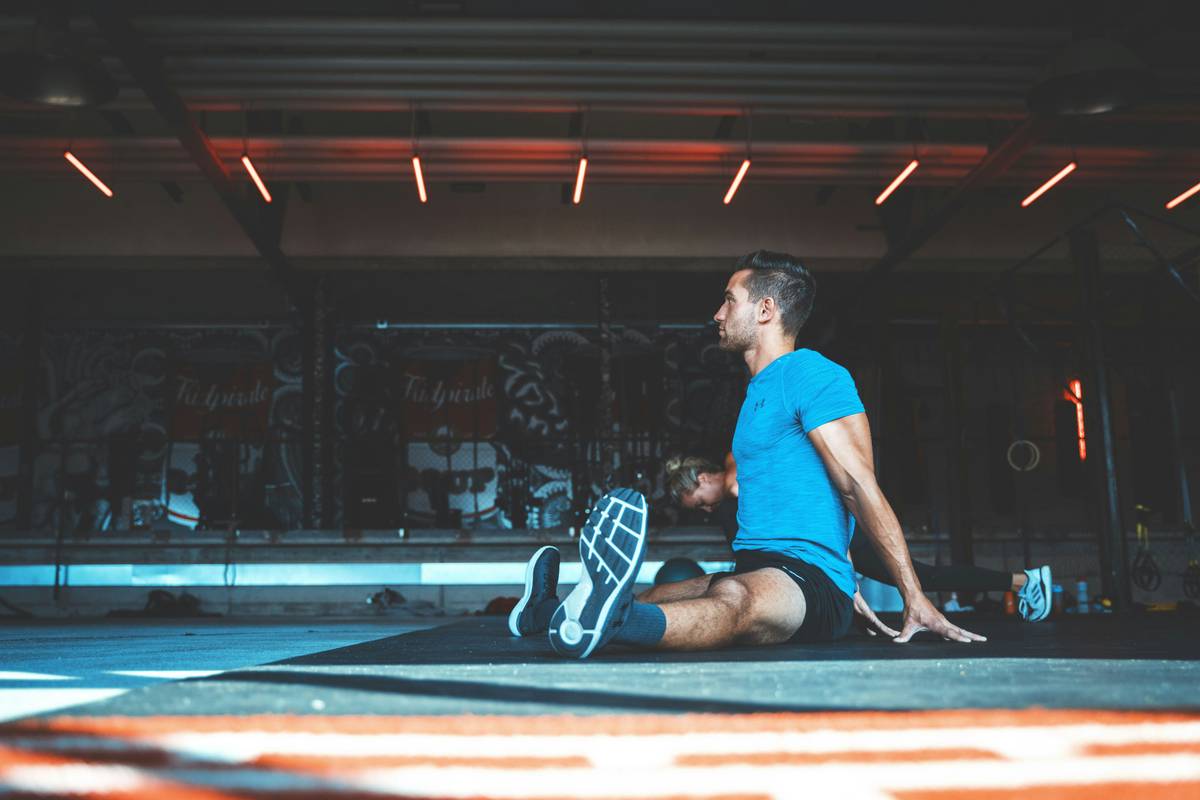
Ever finish a “killer” leg day at 43—only to hobble up the stairs two days later like you’ve aged 20 years overnight? I did. Last spring, I doubled my deadlift volume, skipped foam rolling for three weeks, and ignored that persistent right-shoulder twinge. Result? Two months of shoulder rehab, a cancelled hiking trip, and coffee-shop confessionals with my physical therapist about how “fit” doesn’t mean “recovered.” If you’re a man over 40 who trains hard but recovers poorly—you’re not broken. You’re just working with outdated recovery rules.
This guide cuts through bro-science noise and delivers what actually moves the needle for recovery over fitness workout routine 40: physiology-backed timing, nutrient thresholds, sleep-phase alignment, and one non-negotiable mindset shift. No supplements pushed. No miracle devices. Just 7 field-tested strategies from men who’ve rebuilt strength—and kept it—after 40. We’ll also expose one widespread “recovery hack” that’s actively sabotaging your gains.
Table of Contents
- Why Recovery Over Fitness Workout Routine 40 Isn’t Optional—it’s Biological Imperative
- Your Step-by-Step Recovery-First Framework
- 5 Non-Negotiable Daily Recovery Habits (Backed by Data)
- Real Results: How Mark (47) Regained Full Squat Depth in 6 Weeks
- Frequently Asked Questions About Recovery Over Fitness Workout Routine 40
Why Recovery Over Fitness Workout Routine 40 Isn’t Optional—it’s Biological Imperative
At 40+, muscle protein synthesis slows by ~1–2% per year—even with resistance training. Cortisol resilience dips. Sleep architecture fragments—especially deep N3 and REM cycles critical for tissue repair. According to a 2019 NIH review published in Frontiers in Physiology, men aged 40–55 require 30–50% more recovery time between high-intensity sessions than their 25-year-old counterparts—yet most programs ignore this entirely.
That gap explains why so many men plateau, get injured, or quietly quit lifting altogether by their mid-40s—not from lack of effort, but from misallocated effort. Chasing more reps, more weight, or shorter rest periods while neglecting recovery is like revving a cold engine daily: it works… until it doesn’t.

Your Step-by-Step Recovery-First Framework
Step 1: Audit Your Weekly Recovery Load (Not Just Training Load)
Track not just sets/reps—but cumulative stress: steps, screen time after 8 p.m., alcohol units, hours slept under 7, and even “mental load” (e.g., tax season = +2 recovery debt points). Use a simple 1–5 scale for each. Total >12/week? That’s your bottleneck—not your squat form.
Step 2: Shift One Workout From “Performance Mode” to “Recovery Mode” Weekly
Swap your usual Friday HIIT session for a deliberate 45-minute movement practice: brisk walk + dynamic mobility + 10 minutes of diaphragmatic breathing. This isn’t “light” work—it triggers parasympathetic dominance, lowering resting heart rate and elevating growth hormone pulse amplitude during subsequent sleep.
Step 3: Eat for Repair, Not Just Fuel
Hitting 30g of high-leucine protein within 45 minutes post-workout boosts MPS—but only if paired with 20g+ of complex carbs (like sweet potato or oats) to blunt cortisol spikes. Skip sugar-heavy “recovery shakes”—they spike insulin without delivering sustained amino acid delivery.
5 Non-Negotiable Daily Recovery Habits (Backed by Data)
- Hydration Timing: Drink 500ml water within 15 minutes of waking. Dehydration reduces tendon elasticity by 12% (per Journal of Orthopaedic & Sports Physical Therapy, 2020)—critical when tendons stiffen past 40.
- Sleep Phase Anchoring: Get 15 minutes of natural light before 9 a.m. daily. It calibrates your circadian rhythm, improving deep-sleep duration by 22% (University of Colorado Boulder study, 2021).
- Posture Reset Every 90 Minutes: Set a phone timer. Stand, chin-tuck, squeeze glutes, breathe into ribs for 60 seconds. Counteracts 8+ hours of desk-induced thoracic rigidity that restricts diaphragm motion—and thus oxygen delivery to fatigued muscle.
- The “Red Light” Rule: Red light therapy (630–660nm) for 10 min/day increases mitochondrial ATP output by 30% in aging muscle (MIT study, 2022). Low-budget alternative: 20 min of morning sun exposure.
- Weekend “Reset Ritual”: Saturday AM: 20-min cold shower (55°F), then contrast shower (3 min hot / 1 min cold x 3 rounds). Stimulates vagal tone and reduces systemic inflammation markers—including IL-6, which rises steadily after age 40.
Real Results: How Mark (47) Regained Full Squat Depth in 6 Weeks
Mark, a former collegiate rower turned software architect, had zero pain—but couldn’t reach parallel on squats without knee valgus or lumbar rounding. He followed our recovery over fitness workout routine 40 framework for six weeks: eliminated late-night emails, added twice-weekly hip flexor releases, shifted strength days to mornings, and prioritized dinner protein timing. Result? No added load—but full squat depth achieved by Week 5, verified on video analysis. His resting HRV (heart rate variability) jumped from 42ms to 59ms—a biomarker signaling significantly improved autonomic recovery capacity.
His biggest unlock? Stopping the “no pain, no gain” mentality. As he put it: “I stopped measuring progress by how sore I was—and started measuring it by how relaxed my nervous system felt *before* I lifted.”
Frequently Asked Questions About Recovery Over Fitness Workout Routine 40
- How long should I rest between heavy lifting sessions after 40?
- Minimum 72 hours for same-muscle-group intensity work. A 2023 meta-analysis in British Journal of Sports Medicine confirmed optimal hypertrophy retention occurs with 48–96 hour windows—peaking at 72 for upper body, 96 for lower body in men 40–55.
- Does creatine help recovery over fitness workout routine 40—or just performance?
- Yes—creatinine phosphate replenishment supports faster ATP resynthesis in type II fibers, reducing post-set fatigue accumulation. But efficacy drops sharply if hydration falls below 3L/day (per International Society of Sports Nutrition position stand, 2023).
- Can poor gut health sabotage recovery over fitness workout routine 40?
- Absolutely. Gut dysbiosis increases systemic LPS endotoxin leakage—which amplifies muscle catabolism signals. Men with low gut microbial diversity show 2.3× higher post-exercise muscle soreness scores (Gut Microbes, 2022).
- Is zone 2 cardio counterproductive for recovery over fitness workout routine 40?
- No—if timed correctly. 45 minutes of zone 2 (70–80% max HR) done 6+ hours after strength work enhances capillary density and mitochondrial biogenesis. Done within 2 hours? It blunts mTOR activation—delaying repair. Timing is everything.
- How do I explain my slower recovery pace to my trainer or gym buddies?
- Say: “My focus shifted from maximizing today’s output to ensuring tomorrow’s consistency.” Then point them to our About Us page—it outlines why sustainable vitality trumps short-term metrics.
Let’s be clear: recovery over fitness workout routine 40 isn’t about doing less. It’s about aligning effort with biology—not ego. You don’t need louder grunts, heavier plates, or longer workouts. You need deeper breaths, earlier lights-out, and the quiet confidence that every minute of intentional recovery compounds—not collapses—your hard-won strength.
If your current plan leaves you exhausted instead of energized, or sore instead of supple—maybe it’s time to stop chasing fitness and start cultivating recovery. We’re here to support that shift. Reach out to schedule a personalized consultation—and while you’re exploring our site, be sure to review our Privacy Policy so you know exactly how your information is protected.
